
 30% 50%
 50% 50%
 40% 50%
 50% 30%
 60% 30%
 50% 50%
 50% 40%
 50% 50%
 50% 50%
 50% 50%
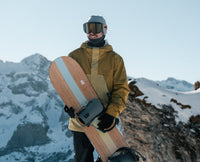
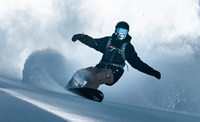
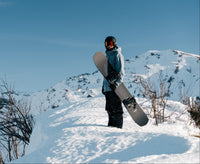
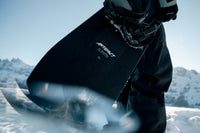

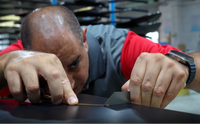

Walk into any snowboard shop and you will hear the same words: camber, rocker, flat, hybrid. They describe the profile of a board, the shape of its running surface when you lay it on the floor and look at it from the side. The profile changes how a board turns, floats, pops and forgives mistakes more than almost any other feature. Here is what each profile does, and how our own profiles (Camrock, Powder Camber and Full Camber+) fit into the picture.
What is a snowboard profile?
Put a snowboard on a flat floor and look at it from the side. Where the board touches the floor and where it lifts off is its profile. Designers play with three basic building blocks, camber, rocker and flat, and combine them to give each board a different personality.
Camber: power and precision
A traditional camber board arches upward between the feet, like a shallow bridge. When you stand on it, the arch flattens and presses the edges into the snow along the whole length of the board. The result is strong edge hold, snappy pop for jumps and a lively, precise feel at speed.
The trade-off is that camber is less forgiving. The edges are always ready to bite, so a small mistake can catch an edge, and the nose does not lift naturally in deep snow.
Rocker: float and forgiveness
Rocker is the opposite: the board curves upward from the middle toward the nose and tail, like a banana or a boat hull. With less edge touching the snow, the board feels loose, easy to pivot and very forgiving. In powder, the raised nose lifts the board to the surface, which gives the sensation of floating.
The trade-off is less edge hold on hard snow and less pop. Pure rocker boards can feel vague at speed on firm slopes.
Hybrids: the best of both
Most modern boards mix the two. A hybrid keeps camber where you need grip and power, and adds rocker where you need float and forgiveness, usually at the nose and tail. That is why hybrid profiles dominate today's all-mountain and freeride boards. The differences between them come down to how much camber, how much rocker and where each one sits.
The three Borealis profiles
We use three profiles across the range. You can read all of our technologies on the Technology page; here is the short version.
Camrock
Camrock combines the best of camber and rocker. It has camber underfoot for edge hold and pop, with rocker sections at the nose and tail for a catch-free ride and better float in powder. On the Reactor, Camrock gives a useful mix of edge contact, forgiveness and float for varied resort conditions, which makes it a friendly choice when you are still building confidence. You will also find it on the Tundra, the Women's Reactor and the Ramen Express splitboard. The Artefact, the Auriga One and the Alpine Pro use a Directional Camrock profile, adapted to their directional shapes.

Powder Camber
Powder Camber is designed for deep snow and dynamic carving. A long, rockered nose gives effortless float, and the camber from the front binding to the tail provides the power and snap for aggressive turns and edge hold on groomers. It is the profile of our powder-oriented boards: the Koi, the Drakkar, the Marauder, the Pilot Fish and the Koi Splitboard.

Full Camber+
Full Camber+ keeps the power and precision of traditional camber and adds a subtle rocker section within the camber profile. You get more control and effortless float in deep snow, without losing that classic locked-in feel. It is the profile of the Auriga, our all-mountain freestyle board.

Which profile is right for you?
- You are learning, or you ride mostly the resort: a Camrock board such as the Reactor is forgiving and still holds an edge. See the twin boards.
- You ride powder, trees and freeride lines: Powder Camber gives float on the way down and grip when the snow firms up. See the directional powder shapes.
- You want power and a classic feel across the whole mountain, with some freestyle: Full Camber+ keeps the camber feel and adds float.
- You ride everything and want one board: a directional Camrock board like the Artefact or the Auriga One is built for that.
Profile is only half the story
Profile works together with shape, flex and sidecut. Two boards with the same profile can ride very differently if one is a true twin and the other a tapered directional. That is why each product page lists the profile together with the shape, the flex and the terrain it suits.
Not sure where to start? Our Board Finder asks about your terrain and level and suggests a board, and you can browse the full snowboard range at any time. Once you have chosen a model, our snowboard size guide helps you pick the right length.
0 Kommentare